

The best gardens are never only about the plants. They are also about the paths you walk, the paving you entertain on, and the structures that hold it all together. Get the mix of the two right and a garden feels effortless. Get it wrong and it either feels like a car park with a few pot plants, or a jungle with nowhere to sit.
That mix has a name in landscaping. The built elements are the hardscape, the living ones are the softscape, and balancing them is what turns an outdoor space into somewhere you actually want to be. Here is what each one means, and how to get the balance right.
The simplest way to picture it is built versus living.
Hardscape is the structural, permanent part of a garden, also called hard landscaping. It is the bones that everything else hangs off, and it usually includes elements like these:
Softscape is the living, changing part, also called soft landscaping. It is the planting that brings colour, texture and life, and it usually covers elements like these:
Hardscape sets the shape and flow of a space and holds up in all weather, while softscape softens those hard lines, shifts with the seasons, and makes a garden feel alive. A good outdoor space leans on both.
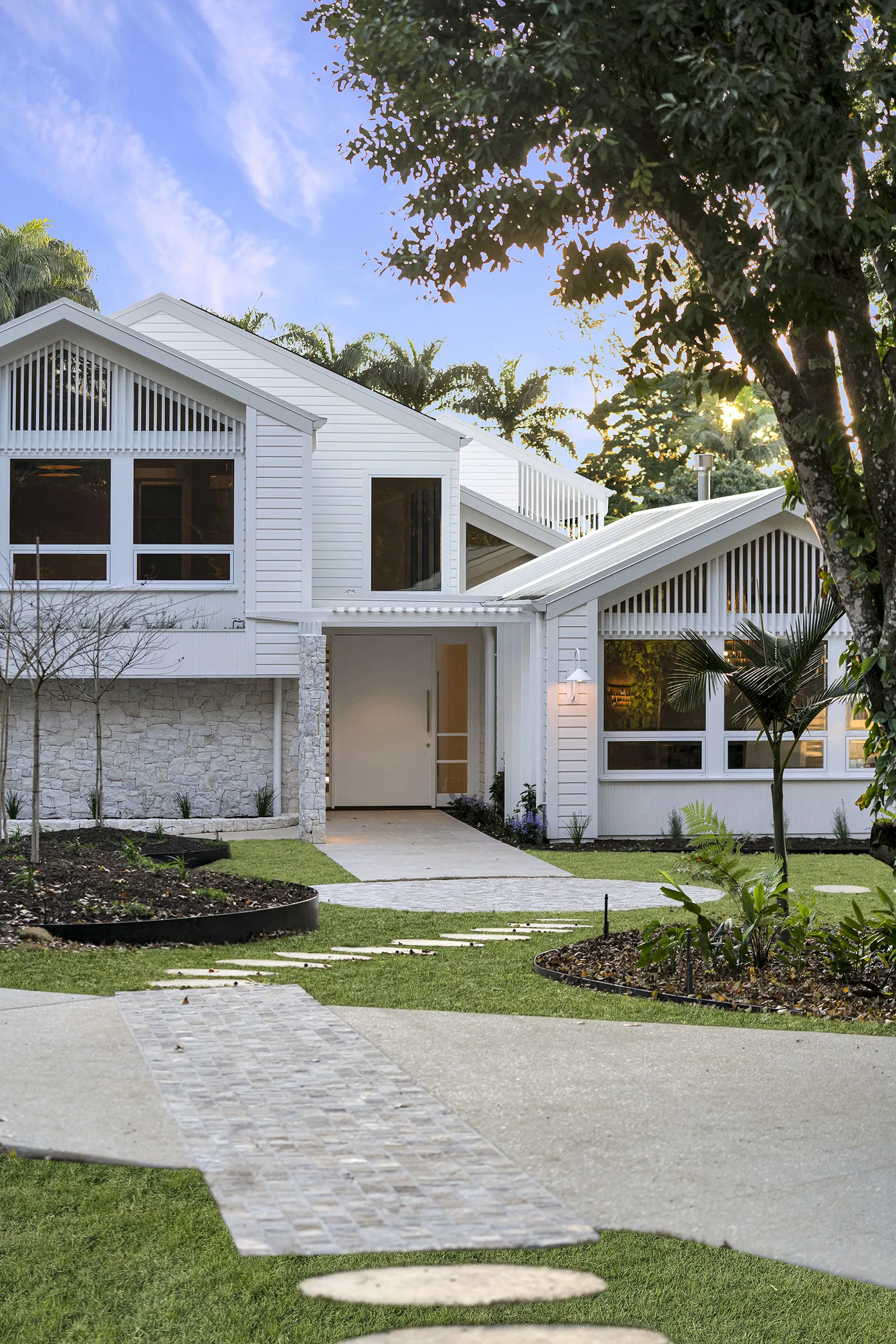
There is no single correct ratio, but there is a simple principle. Hardscape should do the heavy lifting of structure and function, softscape should do the work of warmth and life, and neither should crowd the other out.
Too much hardscape and a space feels hard and sterile, like a paved courtyard with nowhere for the eye to rest. Too much softscape and it can feel shapeless and high-maintenance, lush but with nowhere to sit or walk. The trick is to lead with the hardscape the space genuinely needs, the paths, the patio, the retaining, then layer planting around it until the structure almost disappears into green.
A well-balanced garden shows how seamless this can look. At Brooke's Blooms' Buderim project, natural materials and defined living zones give the garden its structure, while layered, rainforest-inspired planting wraps around them, so the built and the living read as one considered whole.
Some sites make the balance harder to strike. A sloping block is the classic example, where the hardscape has to work even harder, with retaining walls and terracing creating the level ground that planting and lawns then soften.
The structural side of a slope is a discipline of its own, so rather than cover it here, we have a full guide to landscaping a sloping block that walks through terracing, retaining and drainage. The balancing principle stays the same, the hardscape just carries more of the load.

Getting hardscape and softscape to work together is easier on paper than in the ground, which is why a considered design comes first. A good plan maps where the structure goes before anything is built, and chooses planting that suits the site's soil, light and drainage rather than just the look.
That foresight is what avoids the expensive mistakes, like paving that pools water, or plants that outgrow their spot or struggle in the conditions. An expert design that balances the two sets the whole garden up to work, and to keep working as it grows in.
Once the plan is set, the two sides are delivered differently. The hardscape is a construction job, built to last through Queensland heat, storms and daily use. The softscape is planted, then needs ongoing care to stay healthy and hold its shape as the seasons turn.
When one team handles design, build and care, the hardscape and softscape are considered together from the start and looked after together afterwards, which is how a garden stays balanced well beyond its first season.
A beautiful outdoor space is rarely about choosing plants over paving, or the other way around. It is about the two working together, structure you can use and planting you can enjoy, in a mix that suits your home and the way you live in it.
If you are planning a garden and are not sure where that balance sits for your space, tell us what you have in mind. We work across Brisbane, the Gold Coast and the Sunshine Coast, and we are glad to help you find the right mix of hard and soft.
Hardscaping is the design and construction of the solid, built features in an outdoor space, including paths, paving, patios, decks, retaining walls, steps, stonework, pools and fences. Also called hard landscaping, it gives a garden its structure, flow and usable areas, and it is built to hold up to weather and everyday use.
Softscape, or soft landscaping, is the living part of a garden, the lawns, garden beds, trees, shrubs, groundcovers and flowering plants. It brings colour, texture and seasonal change, and softens the hard lines of built structures. Softscape needs ongoing care to stay healthy, and it is what makes a space feel alive rather than just built.
Lead with the hardscape your space needs, such as paths, a patio and any retaining, then layer planting around it so the structure feels softened rather than bare. Avoid too much of either, since all hardscape feels sterile and all softscape feels shapeless. The right balance depends on your site, style and how you use the space.
Yes. Well-designed hardscaping like paving, decks and outdoor living areas adds usable space and lifts street appeal, both of which support a property's value and saleability. The gain is strongest when the hardscape is built to a quality standard and balanced with planting, so the outdoor space feels considered rather than overbuilt.
Hardscaping cost depends on the materials, the size and complexity of the build, site access, and how much structural work like retaining is involved. A simple paved area sits well below a multi-level build with walls and a pool. Brooke's Blooms does not work to fixed pricing, so each project is quoted individually after assessing the site.
Hardscaping a sloped yard usually means terracing it into level areas held by retaining walls, linked by steps and paths, with drainage planned to manage runoff. Steeper blocks need proper structural engineering to stay stable. Our guide to landscaping a sloping block covers terracing and retaining on a slope in detail.
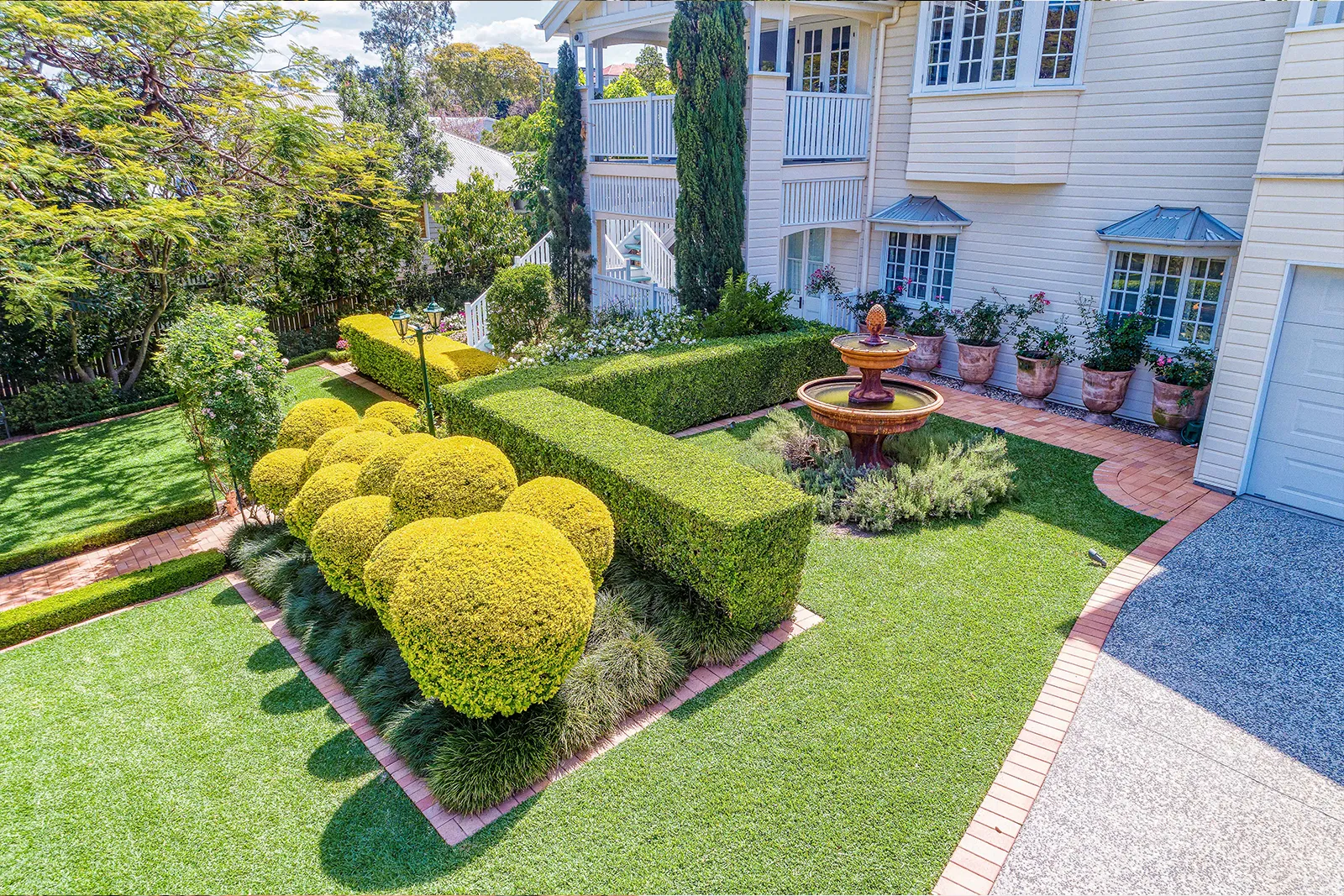
Yellowing, wilting or slow decline in Brisbane garden plants usually traces back to a few causes. Brooke’s Blooms shows how to spot and fix them.
Let us turn your garden into the serene space you’ve always dreamed of, where nature and the built environment seamlessly blend to create functional and beautiful spaces.


